What to Check Before Buying a Generator for Temporary or Standby Power
Understanding Your Power Needs
Choosing a generator for temporary or standby power is about matching the machine to the load, the site conditions, and the expected runtime. The wrong choice can mean equipment that stalls under load, burns through fuel too quickly, or cannot handle the starting surge of motors. A clear checklist helps you avoid those problems and get a unit that fits the job.
The first step is to list every device or system the generator will power. For each item, note its running wattage and its starting wattage. Motors, compressors, and pumps draw much more current when they start than when they run. Adding up the running watts gives you a base number, but the starting surge of the largest motor usually sets the minimum size you need. In practice, many installations require a generator that can handle a surge three to four times its continuous rating for a few seconds. This is why you will often hear about generators sized for critical loads - units that can manage the momentary spike of a large motor while still supplying stable power to other equipment.
Once you know the load profile, you can look at the generator's rated output. That is the continuous power the machine can deliver under normal operating conditions. Manufacturers list it in kilowatts or kVA. Make sure the rated output is at least high enough to cover the running load plus a reasonable margin for voltage drop and future additions. If the generator will run near its limit for long periods, consider a larger model to reduce wear and fuel consumption.
Fuel Type and Consumption
Fuel choice affects runtime, cost, and logistics. Diesel generators are common for industrial and standby work because diesel stores well, delivers good fuel economy, and the engines are built for sustained heavy use. Natural gas or propane units can be cheaper to run if a gas line is available, but they may have lower power density and different maintenance intervals. For temporary sites where fuel delivery is a concern, a diesel set with a large tank or an external fuel supply system can run for days without refueling.
Look at the generator's fuel consumption at full load and at the typical load you expect. Many units have a curve showing gallons per hour across the load range. A generator that burns less fuel at partial load will save money over a long job. Also check the fuel tank capacity and whether the generator can accept an external tank or a fuel transfer pump. For standby installations, a sub-base fuel tank can extend runtime to 24 hours or more without attention.
Voltage, Phase, and Power Distribution
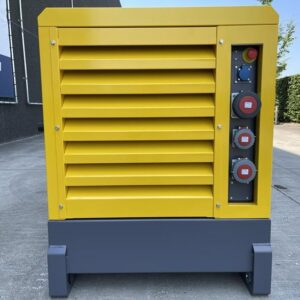
You need to match the generator output to the site's electrical system. Single-phase 120/240V is common for smaller loads and residential-style equipment. Three-phase 208V or 480V is standard for larger motors, pumps, and industrial machinery. A generator that outputs the wrong phase or voltage will not run the equipment, and step-up or step-down transformers add cost and complexity.
If the generator will feed a building's existing electrical panel, you need a transfer switch. A transfer switch isolates the generator from the utility grid and prevents back-feeding, which is dangerous and illegal. Manual transfer switches are simpler and cheaper, but automatic switches start the generator and transfer the load when utility power fails. For temporary sites, a portable generator with a cord-and-plug connection to a load center or distribution panel may be enough, as long as the total load does not exceed the generator's rating.
Power distribution also matters. Long extension cords or undersized feeders cause voltage drop and can overheat. Plan the run from the generator to the equipment and use cables rated for the full current at the distance involved. A load bank test - running the generator at a known load to verify its performance - can reveal wiring or capacity issues before the real job starts.
Starting Current and Motor Loads
Motors and compressors draw a high inrush current at startup, sometimes five to seven times their running current. A generator that can supply that surge will keep the motor running smoothly; one that cannot will cause the motor to stall, the generator to trip its breaker, or both. This is especially important when multiple motors start at roughly the same time, such as in a workshop or a temporary cooling setup.
Some generators handle starting current better than others. Units with a larger alternator, a higher moment of inertia, or a robust voltage regulator tend to hold frequency and voltage steadier under surge. If your load includes large motors, look for a generator that specifies its starting kVA capability or that is rated for motor starting. In practice, that often means choosing a generator rated 20-30% higher than the sum of running loads, or relying on generators sized for critical loads that are designed to ride through the surge without dropping out.
Runtime and Maintenance Intervals
How long does the generator need to run without stopping? For standby power, a few hours may be enough until utility power returns. For temporary power on a construction site or an event, the generator may run continuously for days or weeks. Continuous runtime affects oil change intervals, filter cleaning, and overall wear. Most generator manuals list a recommended oil change every 100 to 250 hours under heavy load. If the generator will run past that interval, you need a plan for on-site maintenance or a unit with a larger oil capacity and a longer service interval.
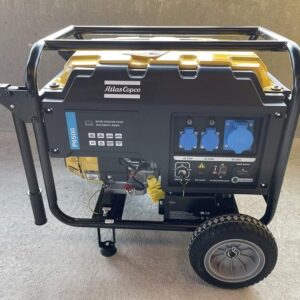
Fuel consumption is part of the runtime equation. A generator running at 50% load uses roughly half the fuel per hour as one running at 100% load. If you can size the generator so it operates in its sweet spot - often between 60% and 80% of rated output - you get better fuel economy and longer engine life than running it near maximum all the time. For extended deployments, a generator with a built-in fuel level gauge and a low-fuel alarm helps you schedule refueling without guesswork.
Noise and Emissions Regulations
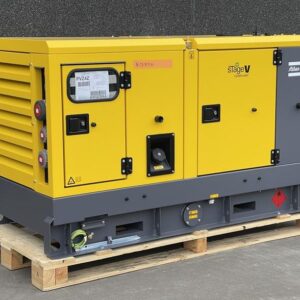
Many sites have noise limits, especially in residential areas or at night. Generators are rated for sound pressure in decibels at a given distance, typically 7 meters or 23 feet. An enclosure or a sound-attenuated package can reduce noise by 10 to 20 dB, but that adds weight and cost. Enclosures also trap heat, so check that the generator's cooling airflow is not restricted. For indoor or semi-enclosed installations, exhaust must be vented outside and the generator must have proper combustion air. Carbon monoxide from a generator can kill in minutes; never run one in an unventilated space.
Emissions regulations vary by region. Some areas require Tier 4 or EPA-certified engines for new installations, especially near populated zones or in non-attainment areas. A generator that meets the local emissions standard avoids fines and shutdown orders. If you are renting or buying used, verify that the engine year and certification match the site's requirements.
Physical Size, Portability, and Connection Points
A generator that is too heavy or too large for the access route is a problem before it even runs. Check the footprint, weight, and lifting points. Skid-mounted units are good for permanent or semi-permanent sits; trailer-mounted generators are easier to move and position. Also check the location of the output receptacle or connection lugs. If the generator sits far from the load, you may need a longer feeder cable or a distribution panel. Make sure the generator has the right type and number of outlets or terminals for your setup.
For temporary power, the ability to connect multiple loads through a single distribution panel or a load center simplifies wiring and reduces the number of cords running across the site. Some generators offer a twist-lock receptacle or a cam-type connector that mates with standard power distribution gear. If you are using a transfer switch, confirm that the generator's output matches the switch input in voltage, phase, and connector type.
Protection and Monitoring Features
Basic protection includes low-oil shutdown, high-temperature shutdown, and a main circuit breaker that trips before the generator is damaged. More advanced units add voltage regulation, frequency monitoring, and auto-start or remote-start capability. For standby installations, an automatic transfer switch with a battery charger keeps the starting battery topped up so the generator starts when needed. For temporary sites, a digital controller that shows voltage, frequency, and engine hours helps you track performance and plan maintenance.
Load management is another useful feature. If the generator is powering several pieces of equipment, a load-shedding controller can drop non-essential loads when the generator is near capacity, preventing an overload. This is common in systems that power both critical and non-critical circuits, such as a data center or a medical facility. For less demanding sites, a simple manual load schedule may be enough.
Finally, consider the generator's starting system. Electric start with a battery is standard on most industrial units. Recoil start is rare on larger machines but may be found on smaller portable sets. A battery charger or a trickle charger that keeps the battery ready is a small detail that prevents a no-start situation when power is needed.
Working through these points before buying or renting a generator saves time, money, and frustration. Match the generator to the load, plan for fuel and maintenance, and respect the site's electrical and environmental rules. A well-chosen generator will deliver reliable power whether it is for a day, a week, or as a permanent standby installation.